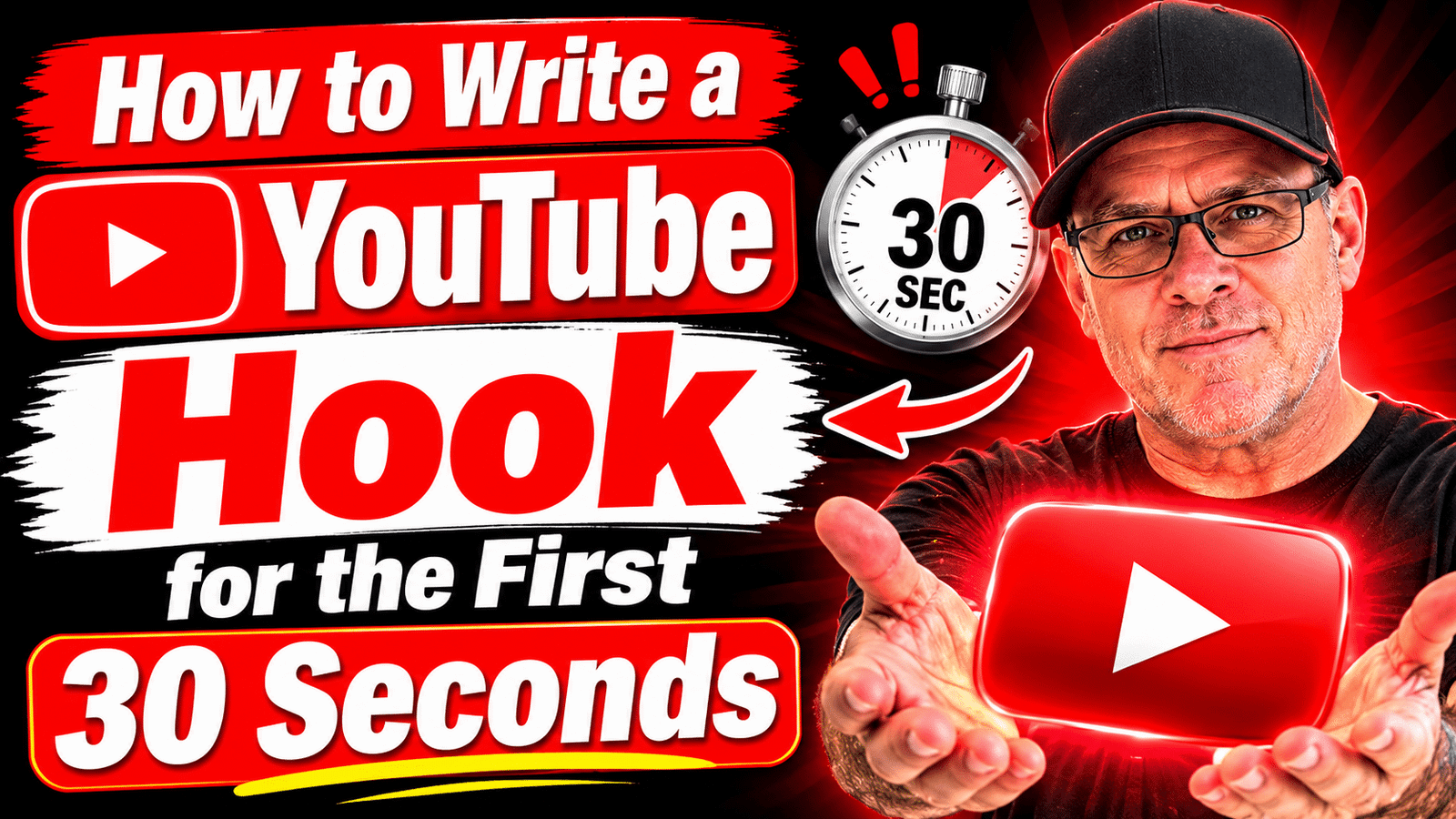
How to Write a YouTube Hook for the First 30 Seconds
Most videos lose a big chunk of their audience before the real content even starts. If you want better retention, more watch hours, and a channel that actually grows, you need to master how to write a YouTube hook for the first 30 seconds. That short window is where viewers decide whether to stay or leave, and YouTube pays close attention to the result.
I’m JV Charles, founder and senior editor at Youtube Made Easy. I’ve sat with creators staring at steep drop-offs in their retention graphs and helped them rewrite the opening until the curve flattened. The difference almost always comes down to what happens in those first half-minute.
Key Takeaways
- The first 30 seconds (especially the first 5–15) largely decide whether a video gets recommended further.
- YouTube Studio tracks “Intro” retention the percentage of viewers still watching after 30 seconds. Strong openings often hold 50% or more.
- A good hook confirms the title and thumbnail promise, creates a reason to stay, and delivers a small piece of value or proof quickly.
- Skip greetings, logos, and “welcome back” intros. Start with the strongest claim, result, or tension.
- Structure most openings in three phases: pattern interrupt, specific promise, then a commitment or open loop.
Why the First 30 Seconds Matter So Much
Viewers click because of the title and thumbnail. The moment the video starts, they are testing whether that promise was real. If the opening feels slow, vague, or mismatched, they leave. That early drop hurts average view duration, which affects how far the algorithm pushes the video.
A clean retention graph in the first 30 seconds gives the rest of the video a much better chance. A steep cliff in that window is hard to recover from later.
The Simple 3-Phase Structure That Works
Think of the first 30 seconds in three short phases:
0–5 seconds: Pattern interrupt
Stop the scroll or the skip impulse. Use a bold claim, a surprising result, a specific number, a provocative question, or a strong visual that matches the thumbnail. No warm-up.
5–15 seconds: Specific promise
Tell the viewer exactly what they will get by staying. Make it concrete. “By the end you’ll know the exact side hustle setup that paid my truck note” works better than “today I’m talking about side hustles.”
15–30 seconds: Commitment or open loop
Give a reason to keep watching through the body of the video. Tease the biggest insight, show a quick proof point, start the story, or open a loop you will close later. This is where many creators stop too early and lose people.
This structure is flexible. The goal is the same every time: confirm the click was correct and make leaving feel like a mistake. Hook Patterns That Consistently Perform
Here are reliable patterns you can adapt to almost any niche:
- Result first: Show or state the outcome immediately, then explain how.
- Bold or contradictory claim: Say something that challenges what the viewer currently believes.
- Problem + tension: Name a specific pain the viewer already feels, then hint at the fix.
- Curiosity gap: Open a clear question or mystery that the video will answer.
- Specific number or proof: “This one change added 1,200 subscribers in 45 days” lands harder than vague success stories.
Whatever pattern you choose, make sure the first line matches the energy and promise of the title and thumbnail. Mismatch is one of the fastest ways to create a steep early drop.
Common Mistakes That Kill the Hook
- Starting with “Hey guys, welcome back to the channel…”
- Long logo or intro animations
- Explaining who you are before giving any value
- Vague statements that could apply to a hundred other videos
- Delivering the full payoff too early (or not delivering any value at all in the first 30 seconds)
- Talking about the video instead of delivering the video
If your retention graph shows a sharp drop in the first 10–15 seconds, the problem is almost always one of these.
How to Test and Improve Your Hooks
Look at the audience retention graph for your last several videos. Compare the shape of the first 30–60 seconds. The videos that held more people usually have a clearer, faster promise.
Write three or four different openings for the same video before you film. Read them out loud. The strongest one almost always feels more specific and more urgent. After publishing, check the Intro percentage in YouTube Studio and adjust the next video based on what actually held people.
Strong packaging (titles and thumbnails) and a strong hook work together. One without the other limits results. That is why how to write YouTube titles and thumbnails and the opening seconds should be planned as a pair.
FAQs
What is a good retention rate for the first 30 seconds?
There is no universal number that fits every niche, but many creators treat 50% or higher as a solid “above typical” target. Compare your videos against each other rather than chasing an external benchmark.
Should I introduce myself in the first 30 seconds?
Only after you have given the viewer a reason to care. A quick name drop is fine once the promise is clear. Long personal intros early almost always hurt retention.
Do Shorts need the same kind of hook?
Shorts move even faster. The first 1–3 seconds carry most of the weight. The same principles apply, just compressed: result, tension, or clear value immediately.
How does a strong hook help with monetization goals?
Better early retention raises average view duration and total watch hours. That directly supports the path toward how to get 8,000 watch hours on YouTube and the current YouTube monetization requirements 2027.
Can I fix an old video’s hook?
You can improve the title and thumbnail, and in some cases re-upload or heavily re-edit the opening. For most channels it is more efficient to apply the lessons to new videos.
Final Thoughts
Mastering how to write a YouTube hook for the first 30 seconds is one of the highest-leverage skills on the platform. It costs nothing extra to film and can change how the algorithm treats every video you publish. Confirm the promise fast, make the value specific, and give people a clear reason to stay past the opening.
At Youtube Made Easy we treat the first 30 seconds as non-negotiable. Get that part right and the rest of the video has a real chance to perform. Get it wrong and even strong content struggles to recover.
Write the opening last if you have to. Make it the strongest 30 seconds in the entire script. Then watch what happens to the retention graph.
References
- YouTube Studio audience retention reports and Intro (first 30 seconds) metrics
- 2026 creator analyses and retention studies on early drop-off patterns and effective opening structures
- Consistent practitioner guidance on pattern interrupts, promise confirmation, and open loops in the first half-minute