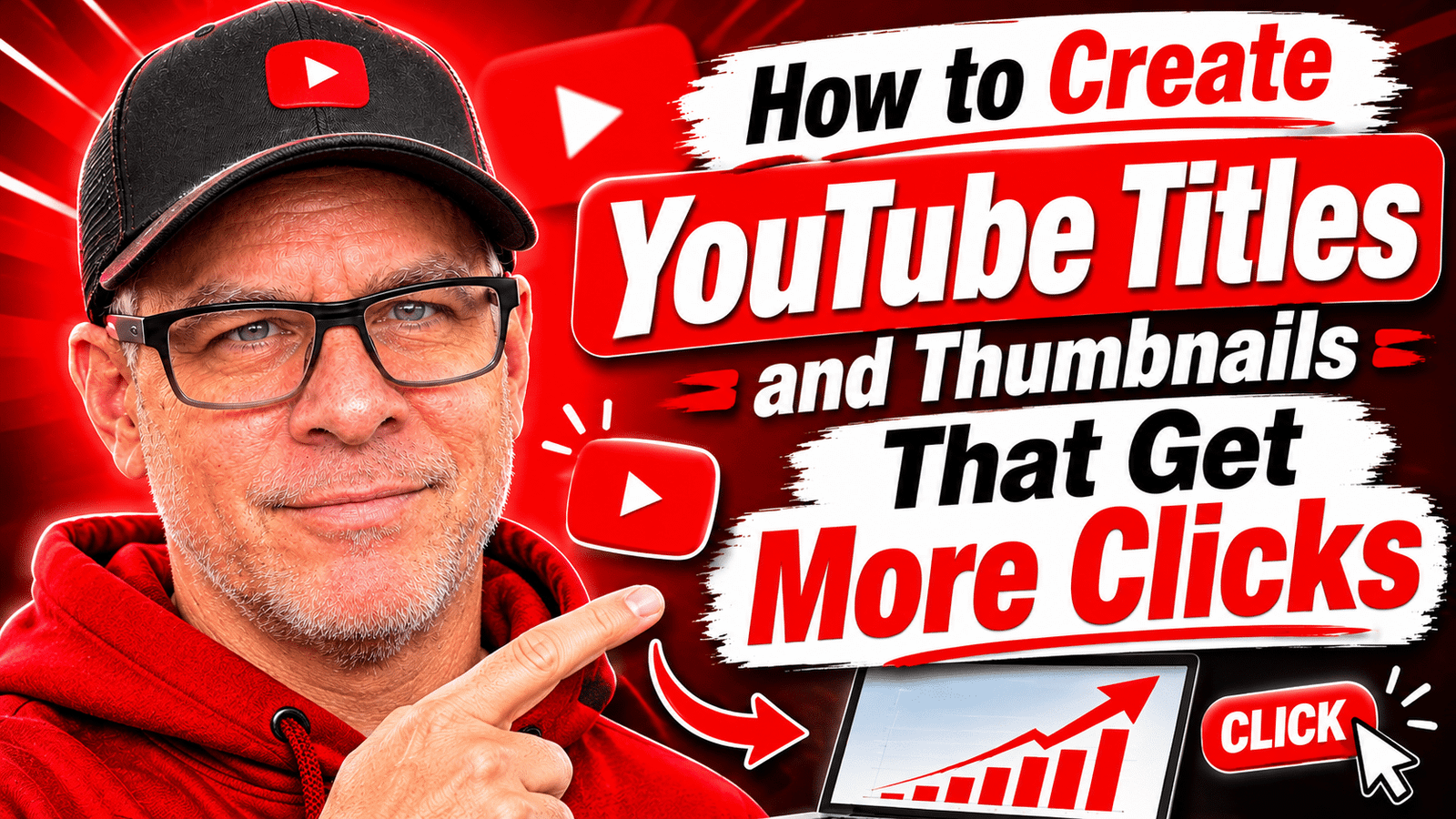
How to Create YouTube Titles and Thumbnails That Get More Clicks
Most creators spend hours editing a video and then rush the part that actually decides whether anyone watches it. If you want more views without changing your content, you need to get serious about how to create YouTube titles and thumbnails that get more clicks. The packaging is what earns the click. Everything else only matters after that happens.
I’m JV Charles, founder and senior editor at Youtube Made Easy. I’ve watched solid videos sit at low impressions because the title and thumbnail failed the two-second test. I’ve also seen average videos take off simply because the packaging was clearer and more competitive. This is one of the highest-leverage skills on the platform.
Key Takeaways
- Title and thumbnail work as one unit. They should complement each other, not repeat the same information.
- Design thumbnails for the small size people actually see (phone feeds and sidebars). One clear idea, high contrast, and minimal text win.
- Strong titles make a specific promise and put the most important words near the front.
- YouTube’s A/B testing tool optimizes for watch time share, not just clicks. High CTR with poor retention hurts you.
- Better packaging improves click-through rate, which leads to more impressions and more watch hours — directly supporting goals like how to get 8,000 watch hours on YouTube and how to get monetized on YouTube.
Why Packaging Decides More Than You Think
On the home feed and in suggested videos, people do not evaluate your full video. They glance at a small rectangle and a short line of text. That decision happens fast. A weak package means fewer clicks, which means fewer chances for the algorithm to learn that your content is worth showing to more people.
In 2026 the system also cares about what happens right after the click. A title and thumbnail that overpromise and underdeliver create early drop-off. That “quality CTR” signal matters. The goal is not just more clicks. It is the right clicks that lead to longer views.
Treat Title and Thumbnail as One Promise
The biggest packaging mistake is treating the two pieces separately. The title and thumbnail should tell one clear story together.
A practical split that works:
- The title carries the specific details the number, the outcome, the timeframe, or the exact topic.
- The thumbnail carries the emotion, the tension, or the visual proof.
If the thumbnail already shows the result, the title does not need to repeat it. If the title already states the exact promise, the thumbnail can focus on the feeling or the before-and-after contrast. Repeating the same words wastes space and weakens the overall message.
How to Write Titles That Earn Clicks
Good titles do three things well:
- Make a specific promise
“YouTube Tips” is weak. “7 YouTube Mistakes That Kill New Channels in 2026” is clearer and more clickable. - Front-load the important words
Titles get cut off on mobile and in many placements. Put the main keyword or the strongest hook near the beginning. - Stay honest
Curiosity is useful. Misleading is not. Viewers who feel tricked leave fast, and that hurts retention and future distribution.
Useful title patterns that still work:
- Number + specific outcome
- How to + clear result
- Problem + solution angle
- “I tested / I tried” with a real constraint
- Direct contrast (X vs Y)
Keep most titles tight enough that the full message shows up without heavy truncation. Specificity beats vague hype.
Thumbnail Rules That Still Hold in 2026
Design for the size people actually see, not the full canvas on your computer.
- One main idea. Busy thumbnails lose at small sizes.
- High contrast. The subject needs to pop against the background.
- Minimal text. Two to five words is usually the ceiling. Three big, readable words often perform best.
- Faces and emotion help in many niches because people notice them faster.
- Check it small. Zoom out or view the thumbnail on your phone before you publish. If it is hard to read at postage-stamp size, it will underperform in the feed.
Text on the thumbnail should add information the title does not already carry. Repeating the full title on the image is almost always a waste.
How to Test Packaging Without Guessing
YouTube Studio includes A/B testing for titles, thumbnails, or both. The system does not simply pick the version with more clicks. It favors the version that produces more watch time overall.
Test clear differences, not tiny tweaks. A completely different emotional angle or a result-focused versus problem-focused approach will give you cleaner data than moving text a few pixels.
Run the test long enough to gather meaningful impressions. Then look at both the click-through rate and the early retention. A packaging change that boosts clicks but tanks the first 30 seconds is not a win.
How This Ties Into Bigger Channel Goals
Strong packaging is not a vanity metric. Higher click-through rate usually leads to more impressions. More impressions give your content more chances to accumulate watch time. That directly supports the path toward how to get 8,000 watch hours on YouTube and the current requirements for how to get monetized on YouTube.
It also works better when the rest of the foundation is solid. A clear niche (the skill of how to pick a YouTube niche) makes packaging easier because you know exactly who you are talking to and what language they respond to. The same goes for the opening of the video itself. Packaging gets the click. The first 30 seconds decide whether they stay.
Common Packaging Mistakes
- Repeating the exact same words in the title and on the thumbnail
- Designing a busy image that only looks good at full size
- Using vague titles that could apply to dozens of other videos
- Overpromising in the packaging and underdelivering in the first minute
- Never testing alternative versions
- Copying a popular style without adapting it to your specific audience and traffic sources
FAQs
What is a good click-through rate on YouTube?
It varies by traffic source and niche. Many videos land between 2% and 10%. Judge your numbers against your own past videos and the same traffic source rather than chasing a universal target.
Should I put my face on every thumbnail?
Faces often help because they create instant recognition and emotion, but they are not required in every niche. Clarity and contrast matter more than forcing a face into every design.
How important is A/B testing?
It is one of the cleanest ways to improve packaging with real data instead of opinions. Use it when a video is getting enough impressions for the test to be meaningful.
Do titles still need keywords for search?
Yes, especially for search traffic. Put the main search phrase near the front when it fits naturally, but never at the expense of a clear, specific promise.
Can better packaging help with the 2027 monetization changes?
Yes. Stronger packaging leads to more qualified views and higher watch time, which helps you reach the current thresholds faster and builds a healthier channel before the higher bar under YouTube monetization requirements 2027 takes effect for new applicants.
Final Thoughts
Learning how to create YouTube titles and thumbnails that get more clicks is one of the fastest ways to improve results without changing your filming or editing process. Treat the title and thumbnail as a single promise. Make that promise specific, visually clear, and honest. Then test the versions that feel strongest.
At Youtube Made Easy we treat packaging as a core skill, not an afterthought. The creators who get this right usually see the difference in impressions and watch hours within a few uploads. Get the click first. Then make sure the video delivers on what the packaging promised.
References
- YouTube Studio A/B testing (Test & Compare) documentation and creator reports on watch time share
- 2026 analyses of high-performing thumbnails and title patterns across niches
- Practical packaging guidance emphasizing title-thumbnail complementarity, small-size readability, and quality CTR